
How to start a faceless digital business: an honest guide
In short
A faceless digital business sells digital products (ebooks, templates, mini-courses) without the creator ever showing their face. To start one, pick a narrow niche, create a simple first product, publish a sales page connected to checkout, then bring in visitors with faceless content on TikTok or Instagram. Shoplit.io writes the ebook with AI, then its sales page on request, and takes payments, all in one place. No sale is guaranteed, and faceless doesn’t mean anonymous.
What is a faceless digital business?
A faceless business sells digital products without its creator appearing on camera. The videos show a screen, hands, a notebook or text over footage, with your own voice or a synthetic one.
The format protects your privacy and fits around a day job, with no studio or gear. It also has limits that pages selling “faceless” courses tend to skip:
- Trust builds more slowly. Without a face, buyers judge your content, the product preview and reviews from real customers.
- It isn’t passive income. You still have to post, answer messages and improve the page and the product. Most creators sell little at first.
- Faceless doesn’t mean anonymous: selling rules often require your name or address on your pages.
What can you sell without showing your face?
The easiest products to sell without a face can be understood from a few pages or a short demo.
| Product type | Effort to create | Example |
|---|---|---|
| Checklist or cheat sheet | Low | a moving-day checklist |
| Ebook or PDF guide | Medium: AI speeds up the first draft, editing still takes time | “plan a budget van road trip” |
| Fill-in template or planner | Medium: the design matters as much as the content | a monthly budget planner for college students |
| Resource pack | Low to medium, but easy to copy | Instagram caption templates for photographers |
| Video mini-course | High: script, screen recording or voice-over, editing | five screen-share videos on budgeting in a spreadsheet |
Start at the top of the table: a short product is quick to test and easy to fix.
How to start a faceless digital business in 7 steps
- Pick a niche. Aim at one problem for one audience: “budgeting as a college student” rather than “personal finance”. Check the demand: questions that keep coming up under videos on your topic or in Reddit threads, comparable products already on sale. Competitors are a good sign: people already buy on that topic. Choose a topic you know well: without a face, the quality of your content is what makes you credible.
- Create a first product. A short guide that keeps its promise beats a ten-module course you never finish. AI drafts a first version in minutes; edit it, check the facts and add your own examples. Our method to create an ebook with AI and sell it covers this step in detail.
- Write the sales page. It says who the product is for, what problem it solves, what’s inside, what it costs and how buyers get it. Without a face, trust comes from a preview of a few pages, a clear refund policy, a contact email, then reviews from real buyers. Never invent any, and don’t promise guaranteed results.
- Set up checkout. You need secure payment and automatic file delivery, through a selling platform or a page connected to Stripe, which will ask for an ID document. If you sell to consumers in the EU or the UK, add a withdrawal waiver checkbox and confirm it to the buyer by email (see the legal basics below).
- Post content without showing your face. On TikTok or Instagram, plenty of formats work without a face: screen recordings, hands filling in the product, text over footage, voice-over, carousels of tips. Each post answers a question from your niche and shows a piece of the product. Aim for consistency over polish.
- Use a single link in bio. One link to a page that gathers your products saves visitors from hunting. Mention it in your videos (“the guide is in the link in my bio”) and pin a post that presents the product.
- Measure, then adjust. Track visits, sales and conversion rate for each page. Lots of visits and few sales: rework the page or the price. Few visits: work on your content. Change one thing at a time. If you run ads, a pixel ties your sales to your campaigns.
In Shoplit.io, steps 2, 3, 4, 6 and 7 happen in one place; only posting (step 5) stays on your social accounts. The tool was built for creators who sell without showing their face. You describe your product in one sentence to the AI assistant, which writes and illustrates the ebook; ask for the sales page in the same message and it is generated alongside. No topic yet? The assistant suggests five ebook ideas for your niche. Payments go through your own Stripe account, and buyers get their file automatically.
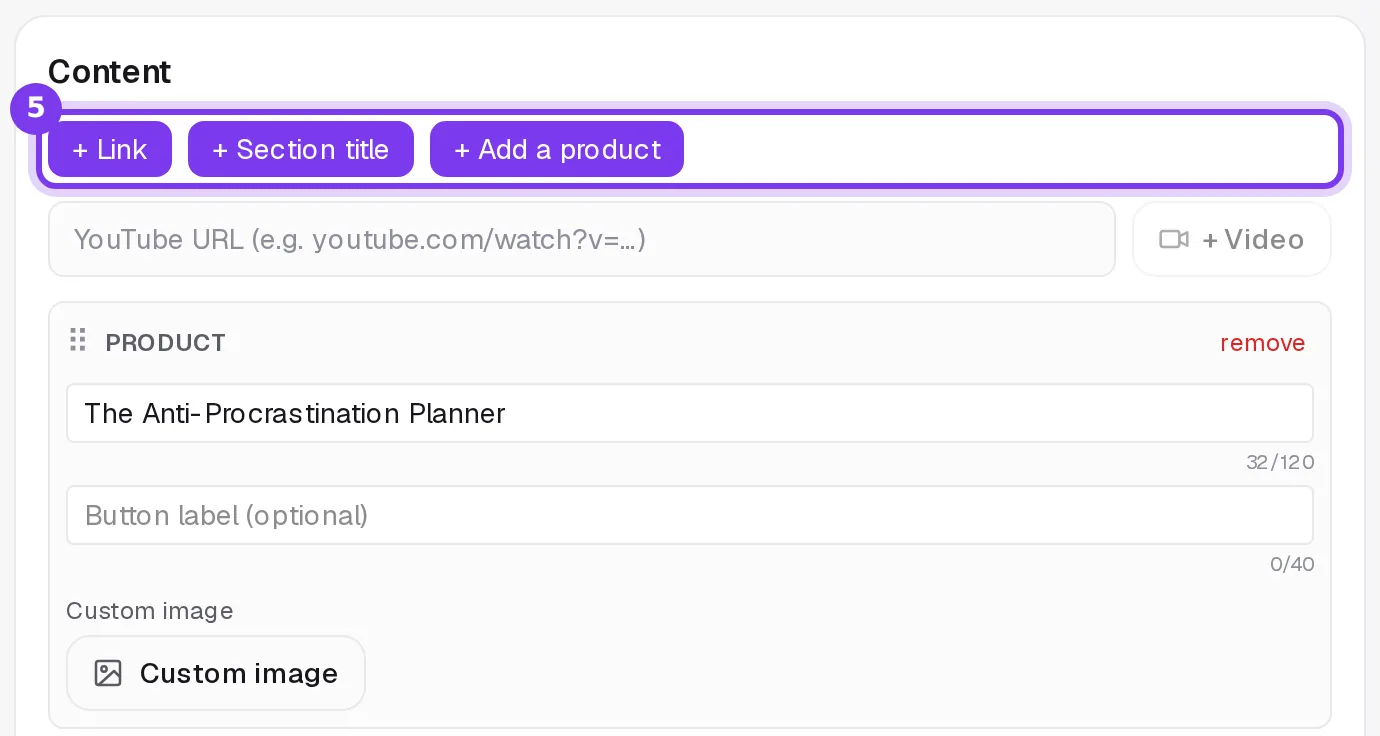
Your storefront, at yourname.shoplit.io, works as a link-in-bio page: you add your sales pages with the + Add a product button, plus your links and YouTube videos.
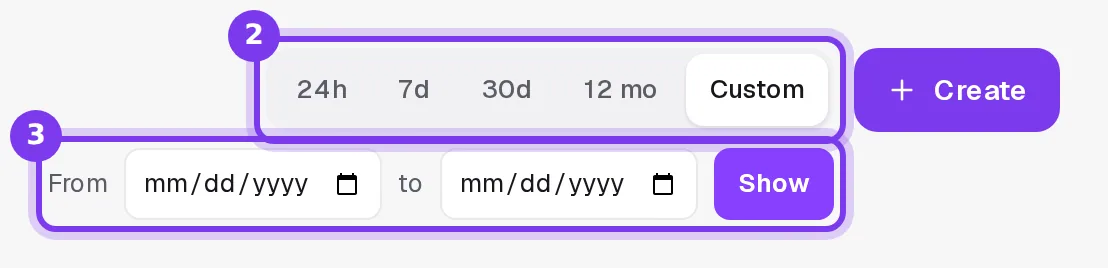
The Home page shows your net revenue, sales, visits and conversion rate for the period you pick. On the Pro and Business plans, the Pixels & Tracking tab in Settings connects your pages to Meta, TikTok, Google Analytics, Google Ads and Pinterest pixels.
The tools to create and sell
Three kinds of tools keep coming up among faceless creators: a selling platform with no subscription (Gumroad), a link-in-bio store (Stan Store, Beacons) and an all-in-one funnel and email tool (Systeme.io). None of them writes and lays out an ebook with built-in AI: that’s what Shoplit.io adds.
| Criterion | Shoplit.io | Gumroad | Stan Store | Beacons | Systeme.io |
|---|---|---|---|---|---|
| Creates the product with AI (ebook) | Yes | Partly AI drafts the listing, not the file | Partly via Stanley, a separate product | Partly AI drafts the listing, not the file | Partly connected ChatGPT or Claude, or AI Chat on Unlimited plan |
| Writes the sales page with AI | Yes | Yes | Partly descriptions via Stanley, a separate app | Yes product page description | Partly AI Chat on Unlimited plan, or prompt for an external AI |
| Sales page builder | Yes | Yes | Yes | Yes | Yes |
| Built-in checkout | Yes | Yes | Yes | Yes | Yes |
| Email marketing | Yes Pro, Business | Yes | Yes Creator Pro plan only | Yes unlimited sends from Creator Plus | Yes |
| Free plan | Free + 10% per sale | Free + 10% + $0.50 per sale | No | Free + 9% per sale | Free |
| First paid plan | €29/month | None | $29/month | $10/month + 9% per sale | €17/month |
- Yes
- Partly
- No
Platform commission, excluding payment processing fees. Prices checked on October 20, 2026 on the official websites. Sources: Gumroad (1, 2, 3, 4), Stan Store (1, 2, 3, 4, 5, 6), Beacons (1, 2, 3, 4, 5), Systeme.io (1, 2, 3, 4)
Gumroad charges no subscription: it takes 10% + $0.50 per direct sale, plus card processing fees. It is the merchant of record: it collects and remits VAT and sales tax for you (source). Its marketplace, Discover, can recommend your products to new buyers after your first sales and a review; the fee there is 30%.
Stan Store is built for the link in bio: a mobile store that gathers products, courses and bookings, with one-tap checkout. Stan takes no commission (0%, plus payment processing fees) but has no free plan: the Creator plan costs $29/month, after a 14-day trial. Email, funnels and upsells require Creator Pro, at $99/month.
Beacons belongs to the same family: an all-in-one link-in-bio page with a digital product store, courses, email and a media kit for brand deals. Its free tier has no subscription and takes 9% per sale (plus Stripe or PayPal fees), a commission that drops to zero from the Creator Plus tier, at $30/month. Its AI assistant writes a product’s description, but you still supply the file you sell.
Systeme.io gives a lot away for free: 2,000 contacts, 3 funnels, one course and unlimited emails, with no credit card, and no commission on sales (0%, plus Stripe or PayPal fees). Paid plans start at €17/month. Its built-in AI Chat, only on the Unlimited plan for now, can set up a course or a product listing, and you can connect ChatGPT or Claude, but no feature listed on its site writes and lays out an ebook. Its terms also cap the total revenue you can make on the free plan.
Pick Gumroad if your product is ready and you hope to be discovered on its marketplace; Stan Store if you sell from your bio and also take bookings; Beacons if you also work with brands, thanks to its media kit; Systeme.io if you want free funnels and emails for a product made elsewhere. Our comparisons of Gumroad alternatives and Systeme.io alternatives cover them in detail.
If you’re starting from an idea, Shoplit.io also creates the product: its AI assistant writes and illustrates the ebook, generates its sales page if you ask for it in the same message, and payments go through your own Stripe account. The Free plan lets you create and sell a first ebook with its sales page; the Pro plan, at €29/month, removes the commission and adds email marketing, pixels and your own domain.
Common mistakes
- Believing income promises. Payout screenshots, “passive income”, “first sales in 30 days”: pages selling faceless courses are full of them, with nothing you can check. A few exceptional results say nothing about what you will get.
- Reselling a private label rights (PLR) pack as is. The same content is already sold by other people.
- Quitting too early. Weeks of posting without a sale are common: check your numbers before switching niches.
- Making up reviews or a fake expert. A fake testimonial misleads buyers and destroys the trust you are building without a face; in the US, it also breaks FTC rules (see below).
The legal basics
This is general information for the US, the UK and the EU, not legal or tax advice: for your own case, ask an accountant or a lawyer.
Business structure
In the US, if you sell on your own without forming a company, you are a sole proprietor by default: “someone who owns an unincorporated business by themselves”, in the words of the IRS. You report your profit on Schedule C, and you owe self-employment tax (Schedule SE) once your net earnings from self-employment reach $400 (IRS). Some sellers later form an LLC; an accountant can tell you whether it makes sense for you. Sales tax on digital products depends on the state.
In the UK, you can start as a sole trader, under your own name or a trading name, and GOV.UK says you must register for Self Assessment if you earn more than £1,000 in a tax year.
Faceless doesn’t mean anonymous
Before an order, UK sellers must give buyers “your business name, contact details and address” (GOV.UK), and EU sellers must give “your identity” and “your physical and email addresses” (Your Europe). In France, a seller’s legal notice must show their full name (Entreprendre.Service-Public, in French). In the US, every marketing email must include “your valid physical postal address”, says the FTC; a registered PO box or a private mailbox counts, which keeps your home address private. And Stripe, like other payment providers, must collect identity information from you when you activate your account.
Income claims, reviews and refunds
If you sell in the US, the FTC is blunt: “Make sure you can back up your earnings (or lifestyle) claims”, and “unusually successful earnings by a handful of people don’t by themselves support making a claim” (FTC, June 2026). Its Consumer Reviews and Testimonials Rule, in effect since October 21, 2024, bans fake reviews and testimonials, and courts can impose civil penalties for knowing violations.
EU buyers have 14 days to withdraw. For a download, they lose that right only if they expressly agree to start it right away and acknowledge they will lose the right (Your Europe), and the seller must then confirm that consent on a durable medium, such as an email (EU Directive 2011/83, Article 16; Your Europe for businesses). UK rules are similar: buyers must agree to the instant download and confirm they know they’ll lose their 14-day right to cancel, and you must include this in your confirmation of the contract; otherwise “the customer will keep their 14 day right to cancel without paying” (GOV.UK). In both cases, send that confirmation by email after the purchase.
In Shoplit.io, the Legal pages tab in Settings holds your legal notice, terms of sale, refund policy and privacy policy, which you write yourself; their links show at the bottom of your pages. The same tab turns on the waiver checkbox at checkout, where buyers request immediate access and acknowledge they give up their 14-day right.
Frequently asked questions
Can you really sell without showing your face?
Yes. A digital product can sell on the strength of its content: a preview of a few pages, a clear table of contents, videos that show the screen, your hands or the product. Trust builds more slowly than with a face, and it rests on consistency, transparency and real reviews. Not showing your face doesn’t make you anonymous, though: your payment provider verifies your identity, and selling rules may require your name or address on your pages.
Which digital products work best for a faceless business?
No format guarantees sales. The easiest to launch without showing your face are products whose content is easy to show: a practical PDF guide, a checklist, fill-in templates, a planner. A screen-share mini-course takes more work. The right product solves one specific problem for one specific audience that you can reach with your posts.
Do you need to register a business to start?
It depends on where you live. In the US, selling on your own makes you a sole proprietor by default, and you report the profit on your tax return. In the UK, you must register for Self Assessment once your self-employed income goes over a set threshold in a tax year. EU countries have their own rules. This is general information, not tax advice: check with an accountant or your tax authority (the IRS, HMRC).
How long does it take to make a first sale?
Nobody can give you an honest timeline: it depends on your niche, your product, how consistently you post and the audience you already have. Most creators sell little at first, and weeks without a sale are common. Be wary of courses that promise income within weeks: in the US, the FTC points out that a handful of unusually successful people doesn’t support a claim that others will earn the same.
Do you need followers to start?
No, but you need visitors. You can create and publish your product before you have an audience, then build one with regular posts in your niche. Fit matters more than numbers: a small account focused on the problem your product solves can sell more than a big general one. Pinterest, search engines and an email list are other sources of visitors.
Step-by-step guides in the help center
Read also
- How to create an ebook with AI and sell it, step by stepHow to create an ebook with AI and sell it: 8 steps from idea to checkout, the tools to combine, and the rules to know (copyright, Amazon KDP, AI disclosure).
- How to build a sales funnel in 7 steps, with an exampleHow to build a sales funnel in 7 steps: opt-in page, sales page, order bump, upsell, emails, consent rules, the tools compared and a full example.